
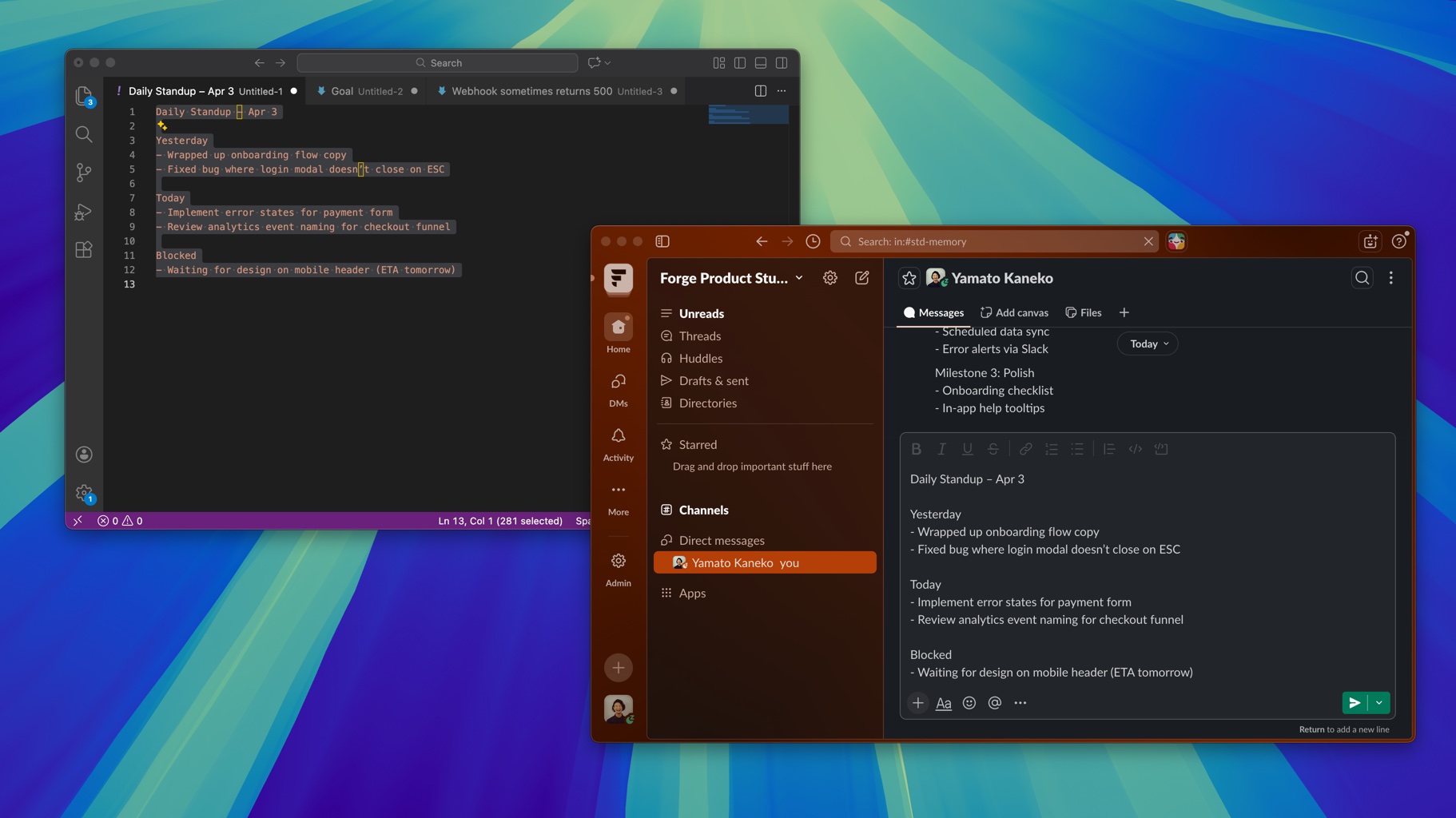
The client, CTO of a hard-tech startup, had tried countless note-taking apps, but folders, tags, and titles always became too much to maintain. Every system eventually collapsed under its own structure, and the workaround that remained was sending messages to himself on Slack.
That raised a simple question: in the so-called second-brain space, are the organizing systems themselves getting in the way of capturing ideas? Starting from that n=1 pain point, we moved quickly to validate the problem globally and ship a product as fast as possible.
Prototyping
We started by building a prototype focused on improving one person's workflow. As we dug deeper, we learned that Slack was where notes were dumped, but the actual first draft of thinking often happened in VSCode across multiple open tabs.
That insight led us to design the product around tab-based "Drafts" and a timeline-based "Archive." We also built "Related notes," which surfaces relevant past notes while someone is typing so they can keep thinking without breaking flow.
Problem interview
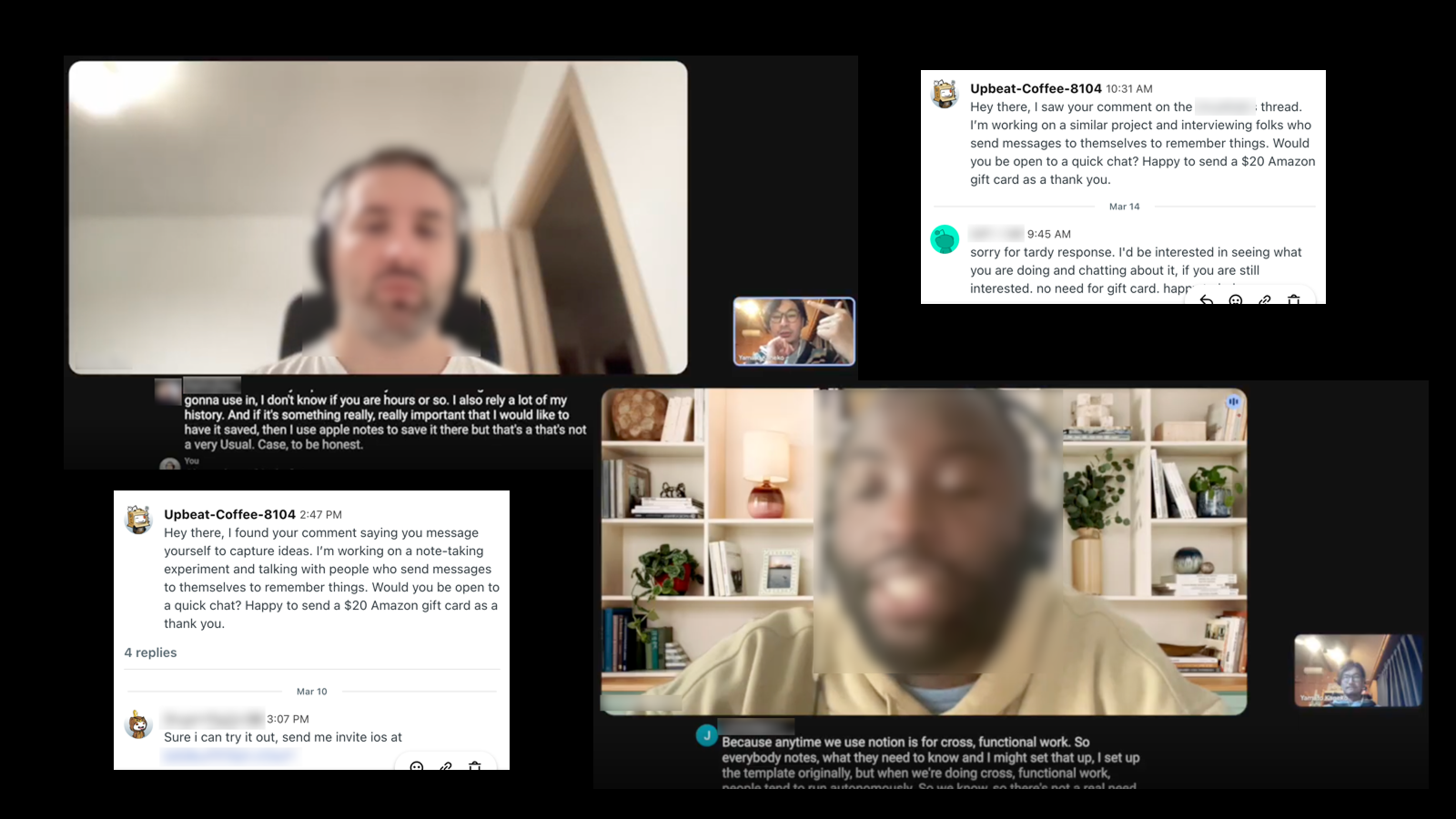
After validating the initial n=1 hypothesis, we wanted to see whether the same pain existed more broadly. We reached target users through Reddit and ran interviews with five people.
There were several important learning. 1) The combination of timeline UI and search felt intuitive because it matched workflows people already knew from tools like Slack. 2) Desktop apps were often blocked by company device restrictions. 3) Even at the demo stage, Related notes stood out as a feature people strongly wanted.
Minimal launch
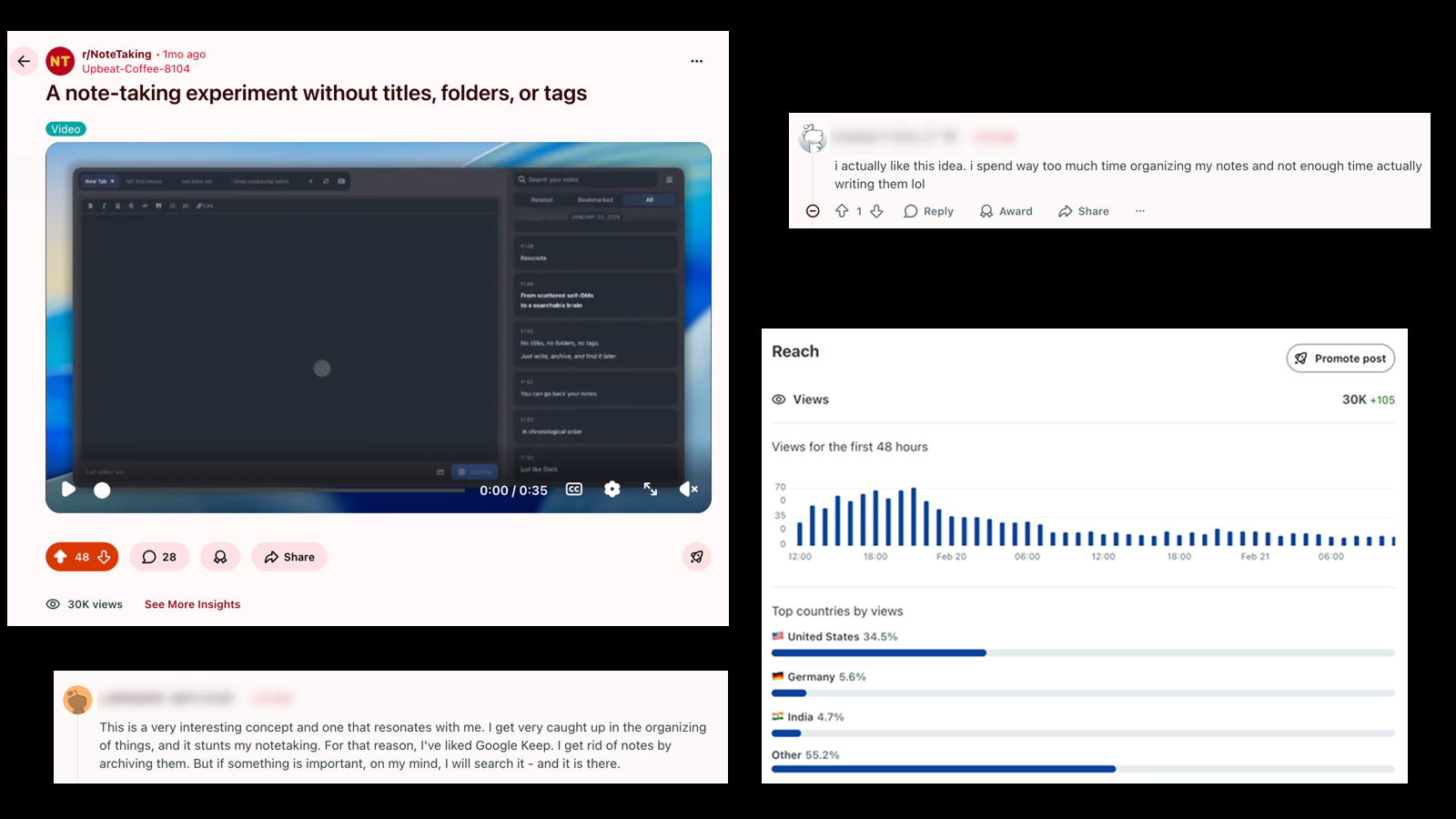
We identified relevant subreddits and ran a small launch across multiple channels. The post on r/notetaking alone generated about 30K views and drove meaningful initial traffic.
At the same time, early retention was weak and many users dropped off quickly, so the next step was understanding exactly where the experience was breaking down.
Usability test
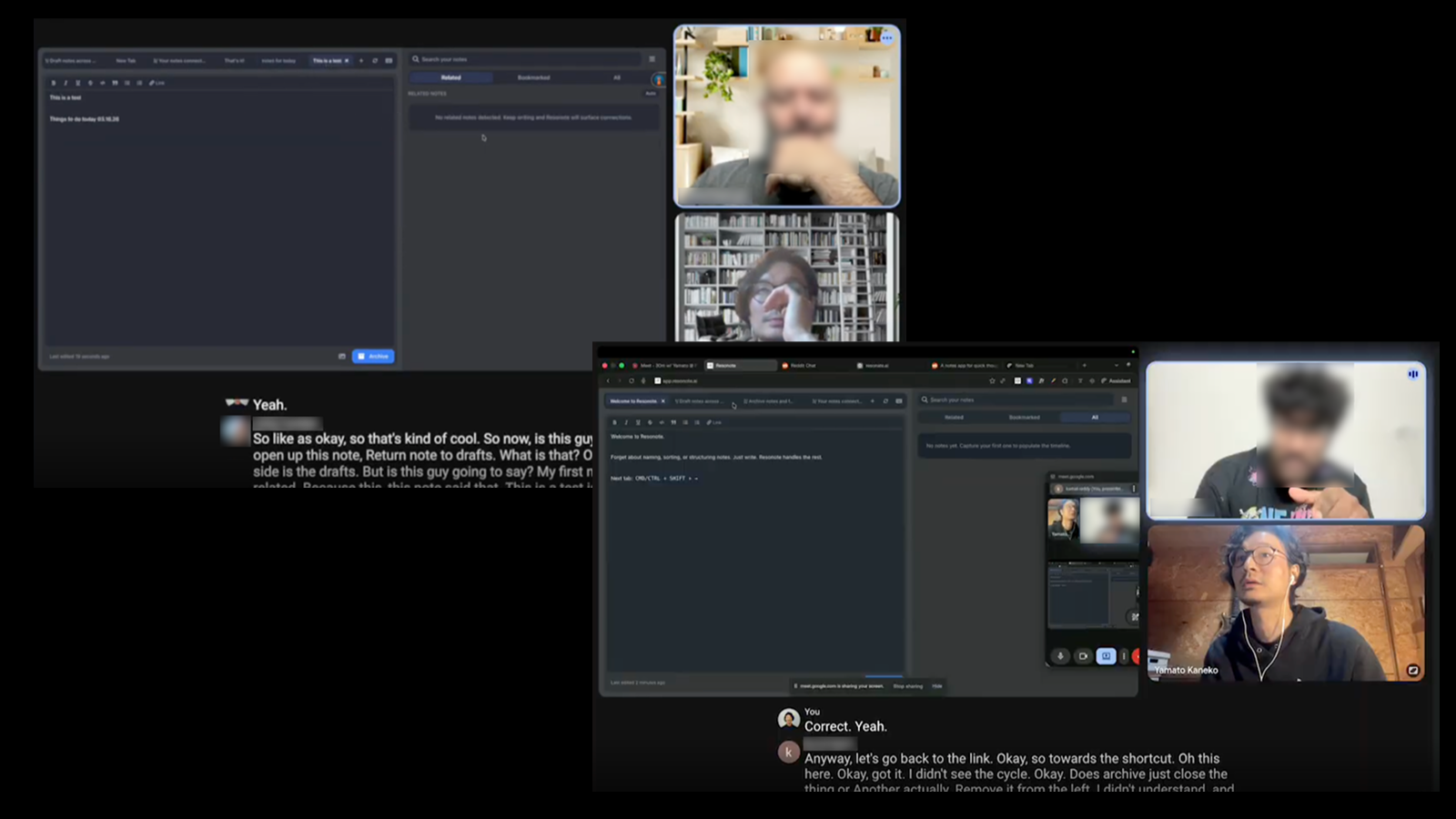
We recruited five more users and ran usability tests over screen share. Watching people use the product for the first time made it clear that many struggled to understand the Draft and Archive structure.
We also saw that slow response times created friction in basic interactions, which added up to frustration across the whole experience.
Pivot
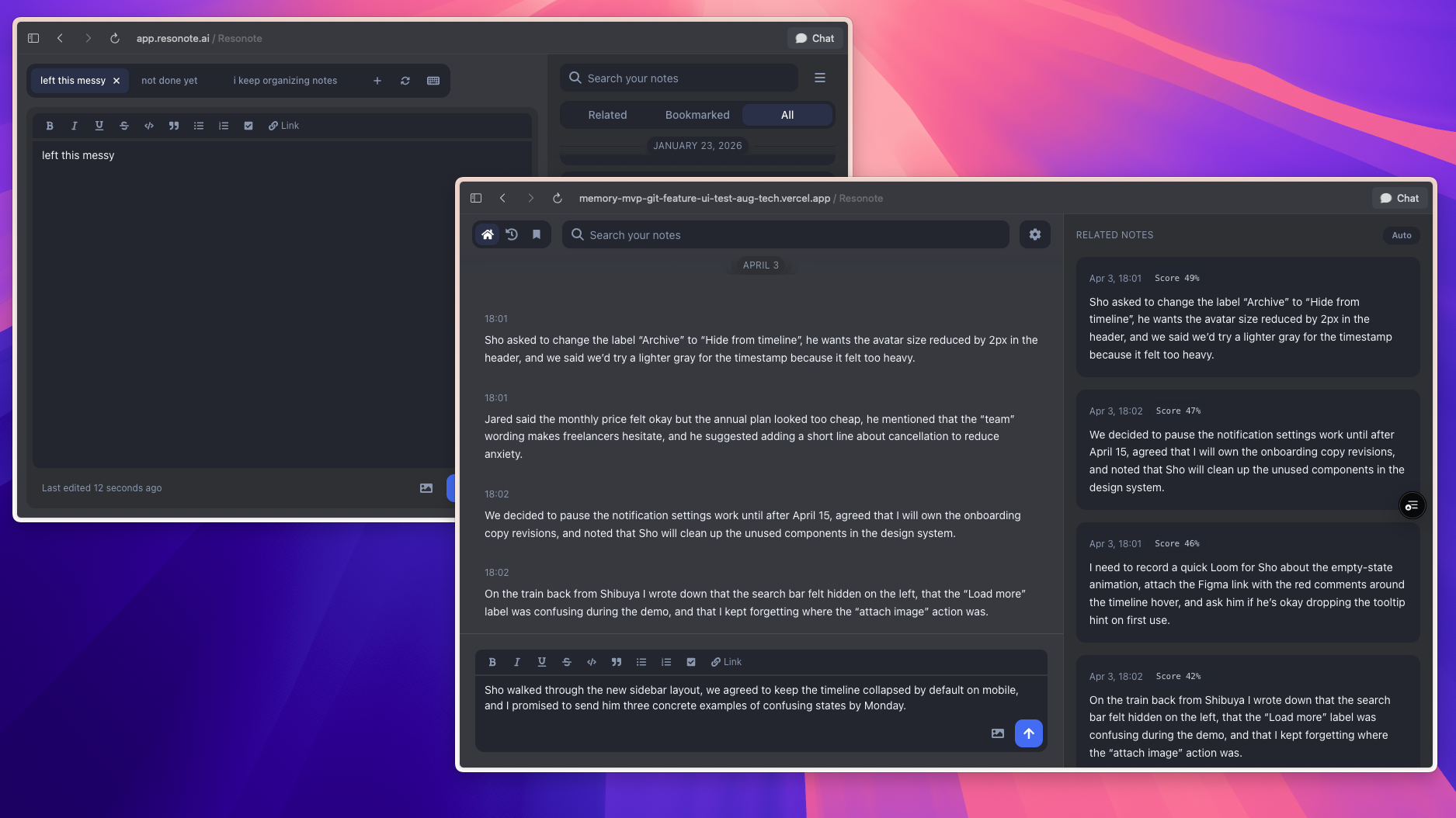
We moved into a significant pivot, redesigning the interface around a timeline-first experience that felt closer to Slack. In parallel, we improved note-saving speed by roughly 2x. The product is still evolving through ongoing experiments and iteration.
“Forge is more than a development partner. They think with us from validation to product direction. We move fast from prototype to launch, ground decisions in real user feedback, and pivot aggressively when needed. The result is a product we use every day.
”